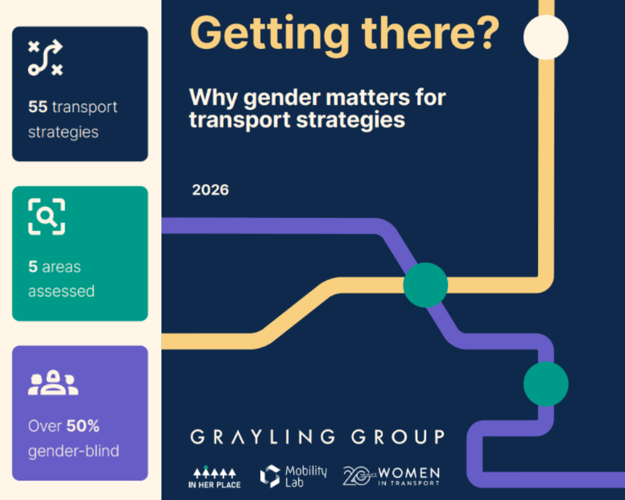
GETTING THERE?
WHY GENDER MATTERS FOR TRANSPORT STRATEGIES
Transport shapes how we live, work and move through our communities. Yet despite decades of evidence showing that women and men travel differently, gender remains largely overlooked in transport planning.
Grayling has supported the development of Getting there? Why gender matters for transport strategies, a new report published in partnership with In Her Place, Mobility Lab and Women in Transport, examining how effectively transport strategies across the UK are addressing the needs of women and girls.
The report assesses 55 transport strategies from across the UK, exploring key themes:
- WOMEN'S TRAVEL PATTERNS AND MOBILITY
- THE EFFECTS OF GENDER
- THE POLICY LANDSCAPE
- EVIDENCE AND ENGAGEMENT
- GOOD PRACTICE AND RECOMMENDATIONS FOR CHANGE

BUILDING A TRANSPORT NETWORK THAT WORKS FOR EVERYONE
Women make up more than half the population, yet their needs and travel patterns are frequently overlooked in transport planning.
By assessing strategies against these five key areas, the report identifies where transport authorities are making progress, where gaps remain and what needs to change to ensure transport planning reflects the needs of everyone.
INSIDE THIS REPORT
key themes at a glance
- No strategy fully addresses women's needs: The highest-scoring strategy achieved just 18 out of a possible 28 points.
- 70% of strategies effectively 'gender-blind': 39 of the 55 strategies assessed scored in the lowest category, with some failing to mention women or girls at all.
- Transport planning still prioritises the male commuter: Women's shorter, more frequent journeys, often involving caring responsibilities, are routinely overlooked.
- Not one strategy linked women's travel patterns to investment decisions: None connected these journeys to route design or investment priorities.
- Women's safety remains a concern: While becoming increasingly recognised in transport planning, commitments often lack specific actions.
- Only 21% of the UK transport workforce are women, according to existing research cited in the report.